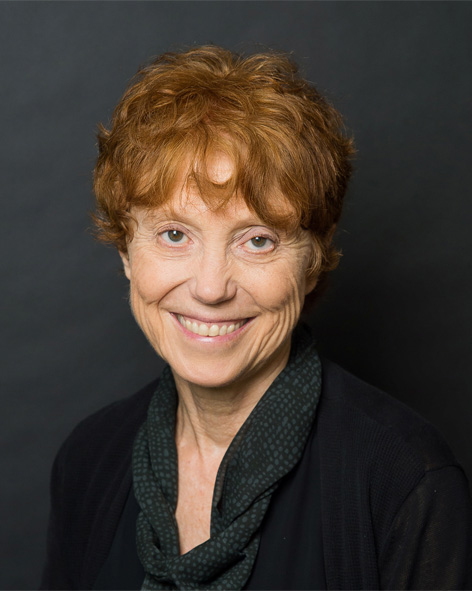


Pierre-Yves Oudeyer
Curiosity in human development: computational theories, experiments and applications in AI and education
A remarkable feat of children's development is their autonomy, open-endedness, flexibility and efficiency at learning diverse skills under strongly limited resources of time and energy. In this talk, I will explain why and how curiosity mechanisms play a crucial role in such capabilities, using a mix of computational theory, AI models, and behavioural experiments to test predictions of these theories.
I will discuss in particular three theoretical perspectives:
1) the Learning Progress theory, proposing that humans use subjective measure of their own learning progress to decide what to explore next; I discuss the links between this theory and metacognition, and I will explain how the theory accounts for long term self-organization of developmental structures in human children; I also explain how some of its predictions were confirmed in recent experimental paradigms with diverse populations, and in experiments run in various labs in the world;
2) Autotelic curiosity-driven exploration, whereby individuals invent, select and pursue their own goals, a very important form of curiosity at the roots of human curiosity and open-ended development, which also forms the basis of recent advances in building open-ended autotelic AI systems;
3) Language as a cognitive tool to boost creative curiosity-driven autotelic exploration.
Beyond providing insights on human development, I also show how this sets the ground for new forms of open-ended AI systems, including autotelic robots exploring and learning in real time in complex environments. Finally, I show several projects and experimental results in classrooms transposing these insights in educational interventions aimed to foster and train curiosity in children, e.g. training curious question-asking.