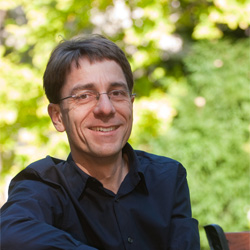

Sabine Kastner
Princeton Neuroscience Institute, Princeton University
Research interest
Her research focuses on the neural mechanisms underlying visual perception, attention and cognition, with particular interest in the functional role of thalamocortical networks.
Keynote abstract
Cognitive functions of the primate pulvinar
The visual thalamus has been extensively studied in terms of its anatomical organization, connectivity patterns, and basic neural response properties. However, its role in perception and cognition has remained poorly understood. Pulvinar is the largest nucleus in the primate thalamus and is considered a higher-order thalamic nucleus, because it forms input-output loops almost exclusively with cortex. From an anatomical perspective, pulvinar is ideally positioned to regulate the transmission of information to cortex and between cortical areas to influence perceptual and cognitive processes.
Evidence from lesion studies in humans and monkeys demonstrates a critical involvement of pulvinar in a number of fundamental cognitive functions, including orienting responses and the exploration of visual space, feature binding, the filtering of unwanted information, and visually-guided behavior. In my talk, I’ll discuss studies that have begun to establish neural correlates that may underlie some of these cognitive functions.
Specifically, I’ll review studies indicating that the pulvinar serves as a timekeeper to coordinate cognitive cortical networks, specifically the primate attention network. Importantly, this function is linked to dynamic network states, possibly regulated by pulvinar.
Electrical microstimulation of pulvinar biases local neuronal populations into burst firing mode and improves attention function with spatial and temporal precision, thereby inducing dynamic state changes in cortex. Together, these and other findings suggest that pulvinar is a key node in controlling cognitive networks.